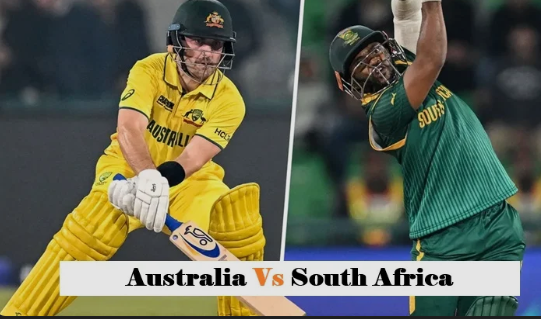
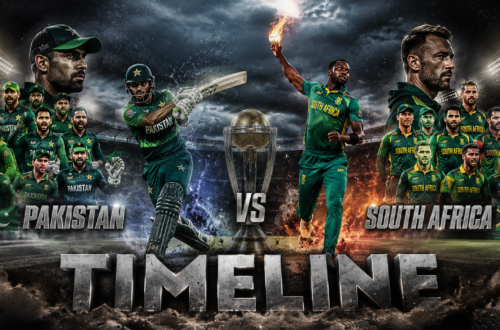
The Australian Men’s Cricket Team vs South Africa National Cricket Team timeline is one of the most intense and emotionally charged rivalries in cricket history. From South Africa’s return to international cricket in the early 1990s to modern day clashes, every encounter has carried pressure, pride, and high stakes drama. What began with cautious respect quickly turned into fierce competition filled with unforgettable moments, dramatic finishes, and legendary performances. Whether it is World Cup heartbreaks, record breaking matches, or aggressive on field battles, this rivalry has consistently delivered world class cricket. It is not just about winning matches, but about proving dominance between two of the strongest teams in the game.
Tournament
Venue
Date
Toss
Australia Score
South Africa Score
Result
Series
Player of the Match
Bilateral ODI
Mackay
Aug 24, 2025
South Africa (field)
431/2 (50 overs)
155 (24.5 overs)
Australia won by 276 runs
Bilateral ODI
Cameron Green (AUS)
Bilateral ODI
Mackay
Aug 22, 2025
Australia (field)
193 (37.4 overs)
277 (49.1 overs)
South Africa won by 84 runs
Bilateral ODI
Lungi Ngidi (SA)
Bilateral ODI
Cairns
Aug 19, 2025
South Africa (bat)
198 (40.5 overs)
296/8 (50 overs)
South Africa won by 98 runs
Bilateral ODI
Kyle Verreynne (SA)
Bilateral T20I
Cairns
Aug 16, 2025
South Africa (bat)
173/8 (19.5 overs)
172/7 (20 overs)
Australia won by 2 wickets
Bilateral T20I
Tim David (AUS)
Bilateral T20I
Darwin
Aug 12, 2025
Australia (field)
165 (17.4 overs)
218/7 (20 overs)
South Africa won by 53 runs
Bilateral T20I
Kwena Maphaka (SA)
Bilateral T20I
Darwin
Aug 10, 2025
South Africa (field)
178 (20 overs)
161/9 (20 overs)
Australia won by 17 runs
Bilateral T20I
Mitchell Marsh (AUS)
WTC Final
Lord’s
Jun 11-14, 2025
South Africa (field)
212 & 207
138 & 282/5
South Africa won by 5 wickets
WTC Final
Kagiso Rabada (SA)
All-Time Head-to-Head
Format
Played
Australia Won
South Africa Won
Tie / Draw / NR
Test Matches
102
54
27
21 (Draw)
ODI Matches
113
52
57
4 (NR/Tie)
T20 Internationals
31
21
10
0
Total Combined
246
127
94
25
All-Time Statistical Leaders
All-Time Batting Leaders (Most Runs)
Player
Team
Matches
Total Runs
High Score
Average
Jacques Kallis
South Africa
92
3,617
147
38.39
Ricky Ponting
Australia
81
3,011
164
43.67
AB de Villiers
South Africa
76
2,987
169
46.52
Graeme Smith
South Africa
68
2,514
162
41.21
Steve Waugh
Australia
64
2,342
160
44.18
All-Time Bowling Leaders
Player
Team
Matches
Wickets
Best Figures
Average
Shane Warne
Australia
45
148
7/56
24.31
Glenn McGrath
Australia
39
132
6/17
21.05
Dale Steyn
South Africa
35
121
6/49
23.45
Shaun Pollock
South Africa
52
118
5/36
25.12
Mitchell Johnson
Australia
28
104
8/61
22.87
First Encounters That Sparked a Fierce Contest
The early meetings between Australia and South Africa in the 1990s were more than just cricket matches, they were the rebirth of a competitive spirit that had been absent for decades. When South Africa returned to international cricket in 1991, their clashes with Australia quickly became intense, tactical, and emotionally charged. Australia, already a dominant force, relied on disciplined bowling and aggressive batting, while South Africa brought hunger, resilience, and a point to prove. The ODI series in 1992 and subsequent Test encounters showed how evenly matched the teams were. Players like Allan Border and Hansie Cronje led from the front, setting the tone for a rivalry built on grit and determination. Close finishes, low scoring thrillers, and strategic battles became common. These early matches did not just produce results, they created belief in South Africa and caution in Australia. It was clear from the very beginning that this rivalry would not be one sided but a fierce contest where every run and wicket mattered deeply.
Year
Format
Venue
Key Result
Highlight
1992
ODI
Sydney
South Africa won
Strong comeback performance
1993
Test
Melbourne
Australia won
Tight low scoring match
1994
ODI
Cape Town
Australia won
Dominant bowling display
1994
Test
Johannesburg
Draw
Balanced contest
1996
ODI
Durban
South Africa won
Emerging team confidence
World Cup 1999 The Match That Changed Everything
The 1999 Cricket World Cup semi final between Australia and South Africa at Edgbaston remains one of the most dramatic matches ever played, a moment that completely transformed this rivalry. South Africa, led by confidence and momentum, seemed destined for their first World Cup final, while Australia fought with desperation and belief. Chasing 214, South Africa were cruising before panic struck in the final overs. Lance Klusener played one of the greatest pressure innings, smashing boundaries and bringing his team to the brink of victory. Then came the unforgettable run out involving Allan Donald, a moment that froze fans across the world. The match ended in a tie, but Australia advanced due to their superior Super Six record. The heartbreak for South Africa was immense, while Australia carried the psychological edge forward. That single match turned respect into intense rivalry, filled with pressure, nerves, and unforgettable drama that would echo in every future encounter between these two giants.
Match
Venue
Result
Key Player
Turning Point
Semi Final 1999
Edgbaston
Match Tied (Australia advanced)
Lance Klusener
Final over chaos
Australia Innings
213 all out
Competitive total
Steve Waugh
Crucial fifty
South Africa Chase
213 all out
Equal score
Klusener 31 off 16
Late hitting
Final Over
1 run needed
Run out
Allan Donald
Miscommunication
Outcome Impact
Australia to Final
SA eliminated
Mental shift
Rivalry intensified
From Respect to Ruthless Competition
As the early 2000s unfolded, the Australia vs South Africa rivalry evolved from mutual respect into something far more intense and uncompromising. Australia, under the ruthless leadership of Steve Waugh and later Ricky Ponting, built a team that thrived on mental pressure, aggressive tactics, and relentless consistency. Their dominance in both Tests and ODIs was backed by world class players like Glenn McGrath, Shane Warne, and Adam Gilchrist, who executed plans with precision. South Africa, however, refused to be overshadowed. With leaders like Shaun Pollock and Jacques Kallis, they developed a balanced side capable of matching Australia in every department. Series between the two were no longer friendly contests but high stakes battles filled with sledging, psychological warfare, and moments of brilliance. Tight finishes and hard fought victories became common, and neither team was willing to give an inch. This phase marked a turning point where every match carried weight, pride, and the growing desire to dominate the other, transforming the rivalry into one of the fiercest in cricket history.
Year
Format
Series Location
Result
Key Highlight
2001
Test
South Africa
Australia won
Dominant pace attack
2002
ODI
Australia
Australia won
Strong batting depth
2002
Test
Australia
Australia won
McGrath bowling masterclass
2003
World Cup
South Africa
Australia won
Big match pressure
2005
Test
South Africa
Draw
SA strong resistance
The Rise of Graeme Smith and a New South African Era
When Graeme Smith took over the captaincy at just 22, South Africa’s approach against Australia changed dramatically. No longer content with competing, they aimed to dominate. Smith brought fearless leadership, leading from the front with aggressive batting and bold tactical decisions. Tours to Australia, once seen as near impossible challenges, became stages for historic achievements. The 2008 and 2009 Test series victories in Australia stunned the cricket world, as South Africa outplayed the hosts in their own conditions. Fast bowlers like Dale Steyn, Morne Morkel, and Makhaya Ntini formed a lethal attack that matched Australia’s intensity, while batsmen like Jacques Kallis and AB de Villiers provided stability and flair. Smith himself played iconic innings under pressure, often setting the tone early in matches. This era shifted the balance of power, turning South Africa into equals and, at times, the superior side. The rivalry now had a new edge, built on belief, aggression, and the refusal to back down against one of cricket’s greatest teams.
Year
Format
Venue
Result
Key Highlight
2008
Test Series
Australia
South Africa won
Historic away series win
2008
Test
Perth
South Africa won
Dominant fast bowling
2009
Test Series
Australia
South Africa won
Back to back success
2009
Test
Melbourne
South Africa won
Strong batting display
2011
Test Series
South Africa
Draw
Balanced competition
434 The Greatest ODI Ever Played
The clash at Johannesburg in 2006 between Australia and South Africa is widely regarded as the greatest ODI ever played, a match that redefined what was possible in limited overs cricket. Australia, led by Ricky Ponting, delivered a batting masterclass, posting a then world record 434 for 4. Ponting’s blistering 164, supported by Adam Gilchrist and Michael Hussey, left South Africa chasing an almost impossible target. Yet what followed stunned the cricketing world. South Africa approached the chase with fearless intent, refusing to be intimidated by the scoreboard. Herschelle Gibbs played the innings of a lifetime, smashing 175 off just 111 balls, while Graeme Smith provided early momentum. The match swung like a pendulum, with momentum shifting every few overs. As wickets fell and tension built, Mark Boucher held his nerve in the final moments, guiding South Africa to a historic win with one wicket remaining. The crowd erupted, records were shattered, and the rivalry reached a new level of intensity. This match was not just about runs, it was about belief, courage, and rewriting cricket history forever.
Innings
Team
Score
Key Player
Highlight
1st
Australia
434/4
Ricky Ponting 164
World record total
2nd
South Africa
438/9
Herschelle Gibbs 175
Historic chase
Opening Stand
SA
97 runs
Smith and Dippenaar
Fast start
Middle Overs
SA
High scoring
Gibbs dominance
Momentum shift
Final Moment
SA
Win by 1 wicket
Mark Boucher
Last ball boundary
Australia Strikes Back with Tactical Supremacy
After South Africa’s rise and iconic victories, Australia responded like true champions, recalibrating their strategies and reclaiming control through tactical supremacy. This phase of the rivalry saw Australia focus on precision, discipline, and exploiting even the smallest weaknesses. Bowlers like Mitchell Johnson brought raw pace and aggression, unsettling South African batsmen with short balls and relentless pressure, while spinners added control in the middle overs. Michael Clarke’s leadership emphasized smart field placements and calculated risks, turning matches through sharp cricketing intelligence rather than just dominance. South Africa, despite their strength, often found themselves under pressure in crucial moments, especially in tightly contested ODIs and Test matches. Australia’s ability to adapt to different conditions, rotate bowlers effectively, and build partnerships under pressure made the difference. Close finishes began tilting in Australia’s favor, restoring their confidence and reestablishing their authority in the rivalry. This period highlighted how Australia evolved from pure dominance to strategic brilliance, ensuring they remained a formidable force against a determined South African side.
Year
Format
Venue
Result
Key Highlight
2012
Test
Australia
South Africa won
Close contest
2014
Test Series
South Africa
Australia won
Tactical bowling
2016
ODI
Australia
Australia won
Strong finish
2018
Test Series
South Africa
South Africa won
Intense battles
2020
ODI
South Africa
Australia won
Controlled chase
Conclusion
Over the years, the Australian Men’s Cricket Team vs South Africa National Cricket Team timeline has evolved into a rivalry defined by resilience, aggression, and mutual respect. Both teams have experienced dominance and heartbreak, creating a balanced and unpredictable contest. From the 1999 World Cup drama to the iconic 434 chase and intense Test series battles, every chapter has added depth to this cricketing story. The rivalry continues to inspire fans with its passion and competitiveness, showcasing the true spirit of the game. As new players step in and formats evolve, one thing remains certain, whenever Australia and South Africa face each other, cricket reaches its highest level.