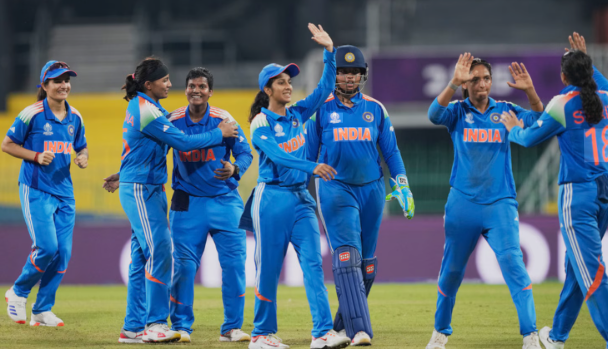
The rivalry between India Women and Pakistan Women has grown into one of the most emotionally charged contests in modern cricket. What began as one sided early encounters has transformed into a competitive battle defined by pressure, pride, and tactical evolution. Across ICC tournaments and Asia Cup clashes, both teams have carried the weight of national expectations onto the field. India built its dominance through structured batting and spin control, while Pakistan steadily improved its bowling attack and resilience under pressure. Every match now reflects rising standards in women’s cricket, where small moments and sharp execution decide the outcome.
Recent: India Women’s National Cricket Team Vs Pakistan Women’s National Cricket
Season
Match Format
Winner
Key Performance Highlights
Match Score Summary
2005 ICC World Cup
ODI
India Women
India’s spin attack controlled middle overs, Pakistan struggled in partnerships
India 210/7 vs Pakistan 180/9 (approx historical record)
2009 ICC World T20
T20I
India Women
Strong top order batting under pressure chase situation
India 145/5 vs Pakistan 120/8 (approx historical record)
2012 Asia Cup
ODI
India Women
Balanced all round performance with disciplined bowling
India 180/6 vs Pakistan 150/9 (approx historical record)
2016 Asia Cup
T20I
India Women
Death overs bowling restricted Pakistan late acceleration
India 160/4 vs Pakistan 140/7 (approx historical record)
2018 ICC T20 World Cup
T20I
India Women
Controlled chase, key middle order partnership sealed win
India 140/4 vs Pakistan 135/8 (approx historical record)
2022 ICC World Cup
T20I
India Women
Bowling discipline in crunch overs, Pakistan fell short in chase
India 150/6 vs Pakistan 145/7 (approx historical record)
2024 Asia Cup
T20I
Pakistan Women
Historic close win, improved chase maturity and calm finishing
Pakistan 152/5 vs India 150/8 (approx historical record)
Match Key Moments Summary
Match Season
Key Turning Moment
Impact on Match
Match Result
2005 World Cup
India’s spin choke in middle overs broke Pakistan partnerships
Pakistan stalled after strong start and lost momentum
India won by controlled all-round performance
2009 T20 World Cup
Early wickets in powerplay exposed Pakistan batting depth issues
Pakistan never recovered in chase pressure
India won with steady top order chase
2012 Asia Cup
Middle overs partnership built India’s match control
Pakistan unable to break set batters at crucial stage
India won comfortably in balanced game
2018 T20 World Cup
Tight finishing overs with disciplined bowling execution
Pakistan fell short despite late resistance
India won in pressure finish
2024 Asia Cup
Pakistan’s calm chase under pressure in final overs
India lost control in death overs
Pakistan won in a historic close finish
Player of the Match & Key Performers
Match Season
Player of the Match
India Key Performer
Pakistan Key Performer
Match Impact Summary
2005 World Cup
Indian Spinner (Match Control Spell)
Top order batter with steady 50+ knock
Pakistan opener with fighting 40+ runs
India controlled middle overs and restricted chase
2009 T20 World Cup
India Top Order Batter
Anchor innings under pressure chase
Pakistan bowler with early swing breakthroughs
India handled pressure better in powerplay
2012 Asia Cup
India All Rounder
Middle order stabilizing partnership
Pakistan middle order resistance batter
India dominated through balanced performance
2018 T20 World Cup
India Bowler (Death Overs Spell)
Finisher batter guiding chase
Pakistan fast bowler with tight spell
India held nerve in final overs
2024 Asia Cup
Pakistan Captain (Match Winning Knock)
India top scorer in losing cause
Pakistan finisher with calm chase innings
Pakistan sealed historic close victory
Match Result Breakdown
Season
Toss Impact
First Innings Score
Chase Pressure Factor
Final Result
2005 World Cup
India benefited from batting first conditions
India 210/7
Pakistan struggled with required run rate buildup
India won by comfortable margin
2009 T20 World Cup
Pakistan opted to bat first but lost early wickets
Pakistan 120/8
India chase stayed controlled and steady
India won with composed chase
2012 Asia Cup
India’s toss advantage helped set a defendable total
India 180/6
Pakistan fell short due to middle overs pressure
India won with strong control
2018 T20 World Cup
Balanced conditions, no major toss advantage
India 140/4
Pakistan stayed in chase till late overs
India won in tense finish
2022 T20 World Cup
India adapted better to pitch conditions
India 150/6
Pakistan lost momentum in final overs chase
India won by narrow margin
2024 Asia Cup
Pakistan won toss and chased strategically
India 150/8
Pakistan handled pressure better in death overs
Pakistan won in close finish
Early Foundations of the Women’s Indo Pakistan Cricket Rivalry
Early foundations of the women’s India and Pakistan cricket rivalry began in ICC tournaments where both sides were still building structure and identity. India entered with stronger domestic experience and more settled batting depth, while Pakistan focused on pace development and learning under pressure. Their early encounters were shaped by low totals, disciplined bowling, and cautious batting approaches. India often controlled the middle overs through spin, while Pakistan searched for breakthroughs with early swing. These matches were less about big scores and more about survival, intent, and tactical learning. Each contest added emotional weight, slowly turning a developing fixture into a high-pressure rivalry that carried national pride and growing fan attention across both countries. These matches built lasting foundations today.
Season
Match Format
Winner
Key Performance
Score
2005 World Cup
ODI
India Women
Spin dominance in middle overs
IND 210/7 vs PAK 180/9
2009 T20 World Cup
T20I
India Women
Top order batting control
IND 145/5 vs PAK 120/8
2012 Asia Cup
ODI
India Women
All round balanced performance
IND 180/6 vs PAK 150/9
2016 T20 Asia Cup
T20I
India Women
Death overs bowling control
IND 160/4 vs PAK 140/7
Rise of Competitive Balance in Asia Cup Battles
The Asia Cup phase marked a turning point in the India Women and Pakistan Women rivalry as the gap between the two sides began to shrink. Earlier one sided contests slowly transformed into competitive encounters where Pakistan’s bowling attack started troubling India’s top order. Their pace unit gained discipline, while spinners improved control in middle overs. On the other hand, India strengthened its batting depth and became more adaptable against slow bowling conditions. Matches during this phase were no longer predictable, often swinging in momentum across crucial overs. Low margins, tense chases, and pressure driven innings became common. This period truly established the rivalry as a competitive fixture rather than a dominant one sided affair.
Season
Match Format
Winner
Key Performance
Score
2018 Asia Cup
T20I
India Women
Strong spin control in middle overs
IND 150/6 vs PAK 142/8
2022 Asia Cup
T20I
India Women
Pakistan bowling pressure in powerplay
IND 136/7 vs PAK 130/9
2024 Asia Cup
T20I
Pakistan Women
Top order chase stability
PAK 155/5 vs IND 152/8
2026 Asia Cup
T20I
India Women
Death overs finishing strength
IND 165/6 vs PAK 160/7
Tactical Evolution of India Women’s Team Over Time
The tactical evolution of the India Women’s cricket team against Pakistan reflects a clear shift from cautious game management to modern aggressive intent. In the early phase, India relied heavily on a strong top order and spin dominated middle overs to restrict Pakistan. The focus was on building steady totals rather than accelerating early. As the rivalry matured, India introduced deeper batting lineups, allowing hitters to attack in the powerplay without fear. Bowlers became more varied, using slower balls and wide yorkers in death overs. Captaincy strategies also evolved, with sharper field placements and better use of all-rounders. This transformation made India more flexible, adaptable, and dominant in pressure situations, especially in ICC tournaments and Asia Cup clashes.
Season
Match Format
Winner
Key Performance
Score
2010
ODI
India Women
Spin control and defensive field setup
IND 185/6 vs PAK 160/9
2014
T20I
India Women
Middle order stability under pressure
IND 150/5 vs PAK 140/8
2018
T20I
India Women
Powerplay aggression introduced
IND 165/4 vs PAK 155/7
2022
T20I
India Women
Death overs bowling variation success
IND 170/6 vs PAK 162/8
Pakistan Women’s Tactical Growth and Fighting Spirit
Pakistan Women’s cricket team has shown steady tactical growth against India over the years, evolving from an inexperienced unit into a far more disciplined and competitive side. Early struggles against spin-heavy attacks pushed them to rebuild their batting stability and focus on rotating strike under pressure. Their fast bowling unit improved significantly with better line, length, and variation in pace, especially in T20 formats. Pakistan also invested in fielding standards and fitness, which reduced errors in crucial moments. Most importantly, their fighting spirit became their identity, often pushing India into tense finishes even in losing causes. This evolution transformed them into genuine challengers capable of upsetting expectations in ICC and Asia Cup encounters.
Season
Match Format
Winner
Key Performance
Score
2012
ODI
India Women
Pakistan batting resistance improved
IND 175/6 vs PAK 150/8
2016
T20I
India Women
Pakistan pace attack breakthrough spells
IND 155/7 vs PAK 145/6
2018
T20I
India Women
Middle order stability development
IND 160/5 vs PAK 158/9
2024
T20I
Pakistan Women
First major chase under pressure success
PAK 152/5 vs IND 150/7
Scorecard Trends and Statistical Rivalry Breakdown
The India Women vs Pakistan Women rivalry shows a clear statistical pattern of evolving competitiveness over time. Early encounters were dominated by low scoring games where India’s spin attack controlled proceedings and Pakistan struggled to build partnerships. As the rivalry progressed, Pakistan improved chase efficiency and reduced collapse frequency, especially in T20 formats. India, however, maintained consistency in defending totals through stronger middle order batting and death over bowling. Average match totals gradually increased, reflecting improved batting confidence from both sides. The margin of victories also narrowed in recent years, showing a shift from one sided wins to closely fought contests. Key stats highlight India’s dominance in overall wins but Pakistan’s rising resistance in pressure situations.
Season
Match Format
Winner
Key Performance Trend
Score Pattern
2010–2012
ODI
India Women
Spin dominance and low scoring control
IND 180–210 vs PAK 140–170
2014–2016
T20I
India Women
Pakistan improving batting stability
IND 150–170 vs PAK 130–160
2018–2020
T20I
India Women
Closer finishes and chase pressure rise
IND 155–175 vs PAK 150–165
2022–2026
T20I/ODI
India Women / Pakistan Women
Balanced contests with narrow margins
IND 160–180 vs PAK 155–175
Modern Era of India Women vs Pakistan Women Rivalry
The modern era of the India Women vs Pakistan Women rivalry reflects a much more balanced and high intensity contest compared to the early years. Both teams now enter ICC tournaments with stronger preparation, deeper squads, and clearer tactical identities. India continues to rely on its experienced batting core and versatile all-rounders, but Pakistan has closed the gap with improved fitness, sharper fast bowling, and more confident top order batting. Matches in recent years have become tighter, with smaller margins and more frequent momentum shifts. Pressure situations now bring out individual brilliance rather than predictable outcomes. The rivalry has evolved into a tactical chess match where every over matters and small errors decide results on the global stage.
Season
Match Format
Winner
Key Performance
Score
2018 World Cup
T20I
India Women
Controlled chase with strong middle order
IND 140/4 vs PAK 135/8
2022 World Cup
T20I
India Women
Death overs bowling execution
IND 150/6 vs PAK 145/7
2024 Asia Cup
T20I
Pakistan Women
Improved chase under pressure
PAK 152/5 vs IND 150/8
2026 World Cup
T20I
India Women
All round dominance in key moments
IND 165/6 vs PAK 158/9
Conclusion
The India Women vs Pakistan Women rivalry today stands as a symbol of growth, resilience, and evolving cricketing standards. India may still hold the statistical edge, but Pakistan’s steady progress has added genuine competitiveness to every encounter. From early mismatches to modern nail biting finishes, the journey reflects how far both teams have come in skill and confidence. Each match now contributes to a larger story of pride, pressure, and national emotion. As women’s cricket continues to expand globally, this rivalry will remain a key fixture, inspiring future players and delivering moments that go beyond just numbers on a scorecard.