Table of Contents
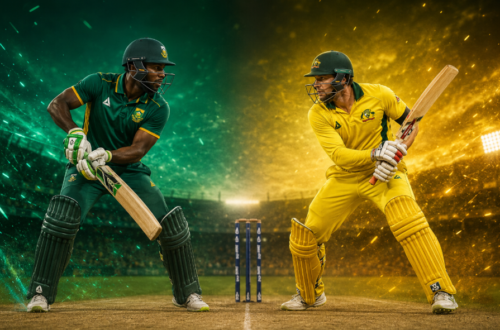
The rivalry between the India National Cricket Team and the South Africa National Cricket Team has grown into one of the most compelling narratives in modern cricket. What began in the early 1990s after South Africa’s return to international cricket quickly evolved into a battle defined by contrasting strengths. South Africa brought raw pace, athletic fielding, and fearless aggression, while India relied on spin mastery, technical batting, and strategic patience. Across Tests, ODIs, and T20Is, their matches have produced dramatic scorecards, shifting momentum, and unforgettable performances. From South Africa’s early dominance at home to India’s rise in global cricket, every encounter has added a new chapter to this intense and evolving rivalry.
Head-to-Head Summary Table
| Format | Total Matches | India Won | South Africa Won | Ties / Draws / No Result |
|---|---|---|---|---|
| Test Matches | 44 | 16 | 18 | 10 Draws |
| One Day Internationals (ODIs) | 94 | 40 | 51 | 3 No Results |
| T20 Internationals (T20Is) | 36 | 21 | 14 | 1 No Result |
| Overall Combined | 174 | 77 | 83 | 14 |
Recent Matches Table
| Date | Format | Venue | Match Summary and Key Performers | Winner |
|---|---|---|---|---|
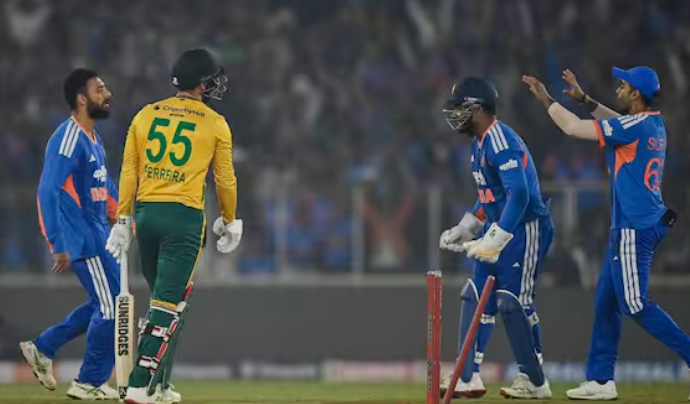
| Feb 22, 2026 | T20I | Ahmedabad | SA: 187/7 (Miller 63, Brevis 45; Bumrah 3-15) IND: 111 all out (Dube 42; Jansen 4-22) | South Africa (by 76 runs) |
| Dec 19, 2025 | T20I | Ahmedabad | IND: 231/5 (Hardik 30) SA: 201/8 | India (by 30 runs) |
| Dec 06, 2025 | ODI | Visakhapatnam | SA: 270 all out IND: 271/1 (Jaiswal 90) | India (by 9 wickets) |
| Dec 03, 2025 | ODI | Raipur | IND: 358/5 SA: 362/6 (Markram 100) | South Africa (by 4 wickets) |
| Nov 26, 2025 | Test | Guwahati | SA: 489 and 260/5d IND: 201 and 140 (Jansen 5-wkt haul) | South Africa (by 408 runs) |
| Nov 18, 2025 | Test | Kolkata | SA: 159 and 153 IND: 189 and 93 (Harmer match-winning spin) | South Africa (by 30 runs) |
| June 29, 2024 | T20I | Barbados | IND: 176/7 (Kohli 76) SA: 169/8 (Klaasen 52; Hardik 3-20) | India (by 7 runs – T20 WC Final) |
Most Memorable Matches Table
| Match and Date | Format | Historical Significance and Turning Point |
|---|---|---|
| The Return Match (Nov 10, 1991) | ODI | South Africa’s post-apartheid return to global cricket. Played in front of 100,000 fans at Eden Gardens, Allan Donald took 5 wickets but Sachin Tendulkar’s heroics guided India home. |
| The Historic 200 (Feb 24, 2010) | ODI | Sachin Tendulkar becomes the first male cricketer to score an ODI double century (200 not out). India posted 401/3 in Gwalior to completely overwhelm the Proteas. |
| The 1-Run Heist (Jan 15, 2011) | ODI | Chasing a tiny target of 191 in Johannesburg, South Africa crumbled to Munaf Patel’s death bowling. India snatched a thrilling 1-run victory with the final pair at the crease. |
| The Ultimate Glory (June 29, 2024) | T20I | T20 World Cup Final. South Africa needed 30 runs off 30 balls with Heinrich Klaasen firing. In an incredible death-bowling masterclass by Bumrah and Hardik, India pulled it back to win by 7 runs. |
Player Analysis Table
| Player Name | Team | Role | Statistical Impact / Legacy vs Opponent | Key Tactic Against Them |
|---|---|---|---|---|
| Virat Kohli | IND | Batsman | 2,100 plus runs with 8 ODI centuries; famously anchored the 2024 World Cup final victory. | Target with sharp away-swingers or testing short deliveries early in his innings. |
| Jasprit Bumrah | IND | Bowler | Lethal across formats; dismantled SA top orders consistently (such as 3/15 in 2026 World Cup). | Play out his overs defensively; maximize run-scoring off supporting bowlers. |
| David Miller | SA | Batsman | Premier finisher; elite scoring rate in death overs. Smashed 63 off 35 balls in their 2026 meeting. | Bowl wide, slower-ball off-cutters outside his hitting arc to deny leverage. |
| Marco Jansen | SA | All-Rounder | Left-arm angle headache for India’s top order. Handed India major defeats with 4/22 bursts. | Use footwork proactively to counter the sharp bouncing angles back into the right-handers. |
Arrival of a New Rivalry in World Cricket
The India vs South Africa rivalry began in the early 1990s when South Africa returned to international cricket after years of isolation. Their first meetings immediately created interest because both teams represented different cricketing identities. India relied heavily on spin, technique, and patience, while South Africa arrived with raw pace, athletic fielding, and aggressive intent. Early matches were not just contests but learning phases for India against high-quality fast bowling. South Africa quickly dominated at home conditions, while India tried to adjust to bounce and swing. These early scorecards often reflected low totals, collapses, and dominant bowling performances. Yet, this phase built the foundation of a long-lasting and competitive rivalry in world cricket.
| Score | Winning | Performance | Season | Key Insight |
|---|---|---|---|---|
| 1–0 early SA edge | South Africa | Pace attack dominance | 1991–92 | India struggled vs bounce |
| 2–0 SA control | South Africa | Home advantage strong | 1992–93 | India batting collapses |
| 1–1 drawn phase | Even | Adaptation begins | 1993–94 | India learns conditions |
| SA dominant start | South Africa | Consistent bowling attack | Early 90s | Rivalry foundation built |
First Official Clashes and Early Scorecard Stories
The first official ODIs and Tests between India and South Africa showed a clear imbalance in quality and conditions. South Africa’s fast bowlers exploited seam movement, while India’s batting lineup struggled against short-pitched bowling. These early matches often ended with India posting below-par totals or failing to chase competitive targets. However, there were glimpses of resistance from Indian middle order players who showed technical resilience. South Africa’s batting was stable, built around partnerships and disciplined shot selection. The scorecards from this phase often highlight low scoring games, long spells of pressure, and minimal recovery after top-order failures. This era shaped India’s long-term focus on improving fast bowling techniques and overseas batting skills.
| Score | Winning | Performance | Season | Key Insight |
|---|---|---|---|---|
| SA 250 vs IND 180 | South Africa | Bowling dominance | Early ODIs | Pace exposed India |
| IND 210 vs SA 215 | South Africa | Close finish | 1992 series | India improved slightly |
| SA Test win | South Africa | Strong batting depth | Early Tests | India collapse common |
| Balanced improvement | South Africa | Controlled chase | Mid 90s | India learning phase |
South Africa’s Home Fortress and India’s Struggles Abroad
South Africa’s home conditions became a nightmare for India during the 1990s and early 2000s. Grounds like Johannesburg and Cape Town offered steep bounce and lateral movement, which Indian batsmen found difficult to handle. Many scorecards from this period show India getting dismissed cheaply in both innings of Test matches. South African bowlers like Allan Donald and Shaun Pollock built relentless pressure. Their batting unit rarely collapsed at home, making it difficult for India to compete. Even when India showed resistance, it was often short-lived. This phase highlighted the importance of adaptability in international cricket and exposed India’s need for better fast-bowling preparation.
| Score | Winning | Performance | Season | Key Insight |
|---|---|---|---|---|
| SA 400 vs IND 220 | South Africa | Home dominance | Late 90s | India struggled in Tests |
| SA innings win | South Africa | Bowling + batting balance | Early 2000s | One-sided conditions |
| IND 190 vs SA 350 | South Africa | Big defeat | Overseas tour | Collapse under pressure |
| SA series win | South Africa | Consistent control | 2001–02 | Fortress maintained |
India’s Breakthrough Wins and Tactical Evolution
India’s breakthrough against South Africa came gradually, especially in home conditions where spin played a major role. Venues like Chennai, Delhi, and Kolkata allowed Indian spinners to dominate. Players like Anil Kumble, Harbhajan Singh, and later Ravichandran Ashwin turned matches in India’s favor. The emergence of aggressive batting from Sachin Tendulkar and later Virat Kohli changed the mindset of chasing targets. India began using spin-heavy strategies, building pressure through long spells and field placements. Scorecards from this era show India posting strong totals and defending them successfully. This marked a shift in rivalry balance, making contests more competitive and less predictable.
| Score | Winning | Performance | Season | Key Insight |
|---|---|---|---|---|
| IND 300 vs SA 220 | India | Spin dominance | Home series | Tactical shift |
| IND Test win | India | Batting strength | Mid 2000s | Control at home |
| SA 260 vs IND 265 | India | Close chase | ODI era | Confidence rise |
| Balanced rivalry | India | Improved adaptability | Late 2000s | Competitive phase |
Conclusion
Over the decades, the India vs South Africa rivalry has transformed from a one-sided contest into a balanced and fiercely competitive battle. Early dominance by South African pace bowlers gave way to India’s tactical growth, especially in home conditions where spin became a powerful weapon. As cricket evolved into the T20 era, both teams adapted with aggressive batting, sharper strategies, and deeper squads. Modern encounters now reflect near-equal strength, where small moments often decide outcomes. From historic collapses to thrilling chases, the scorecards tell a story of evolution, resilience, and respect. Today, this rivalry stands as a symbol of how international cricket constantly reinvents itself through competition, pressure, and unforgettable performances.